.jpg)
The scheme was launched in 2012 in collaboration with three Oil Marketing Companies and Union Ministry of Petroleum and Natural Gas for which Delhi Government had incurred an expenditure of Rs 62 crore (Rs 620 million).

Talking to reporters Khatkar Kalan, he also suggested that Pakistan's spy agency Inter-Services Intelligence will use farmers' unrest over the new farm laws and will try to foment trouble in the border state of Punjab.

Party's state unit chiefs of Delhi, Uttar Pradesh and Gujarat were also detained along with the workers during the protests.

Police personnel in adequate strength were deployed across the state to maintain law and order, officials said.

Mahinda Rajapaksa, along with his wife and family, fled his official residence -- Temple Trees -- and took shelter at the naval base in Trincomalee.

However, it is immediately not clear whether the relaxation will be given fully or partially.
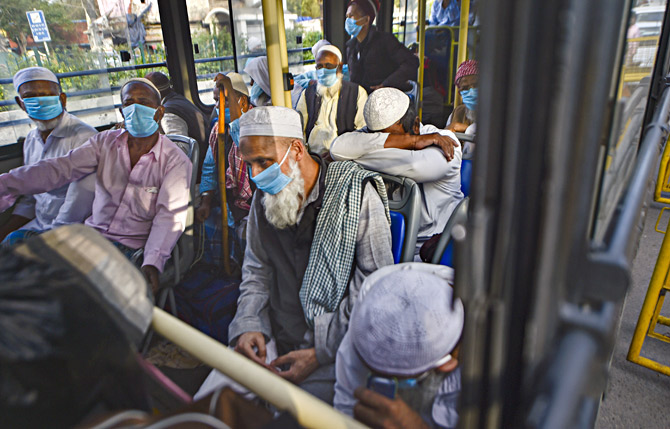
Joint Secretary in the health ministry Lav Agarwal said 154 new positive cases of the disease have been reported due to the transit-related history of those who attended the Tablighi Jamaat congregation. These include 23 new cases from Jammu and Kashmir, 20 from Telengana, 18 from Delhi, 65 from Tamil Nadu, 17 from Andhra Pradesh, nine from Andaman and Nicobar Islands and two from Puducherry.
The government intends to continue with the top GST slab of 28 per cent for luxury and sin goods, but is open to discuss narrowing down the three slabs of 5, 12 and 18 per cent into two, Revenue Secretary Tarun Bajaj said on Monday. Addressing the industry leaders, Bajaj said the rate rationalisation exercise of the GST Council is a result of introspection of GST, five years after its rollout, and the policymakers do not have a "fetish" to raise the tax rates to the revenue-neutral level of 15.5 per cent. On the industry demand for bringing petroleum products under GST net, he said since fuel constitutes a larger part of their revenues, both the Centre and states have some apprehension.

'Nehru wanted to strengthen industries by exploiting agriculture and that policy was continued by successive governments.'
